 China AI Hub
Models / Kimi K2.6
Kimi K2.6
Kimi K2.6 family · Provider: moonshot-ai · Status: deprecated · Released: 2026-04-20
Kimi K2.6 is a Kimi K2.6 model developed by moonshot-ai, a Chinese AI company headquartered in 13F, Building 1, JD Technology Building, 76 Zhichun Road, Haidian District, Beijing, China, released 2026-04-20 with a 262,144-token context window and open weights.
| Key fact | Value |
|---|---|
| Model ID | kimi-k2.6 |
| Architecture | Mixture-of-Experts (MoE): 1T total / 32B activated; 384 routed experts (8 selected + 1 shared); MLA attention, SwiGLU activation; 61 layers (1 dense); MoonViT vision encoder (400M) |
| Context window | 262,144 tokens |
| Max output | 98,304 tokens |
| Open weights | Yes |
| License | Modified MIT |
| Self-hosting | Yes |
| API available | Yes |
| API pricing | $0.95 input / $4 output per 1M tokens (USD) · provider pricing page |
| Cloud providers | Moonshot AI Platform |
Capabilities
| Capability | Supported |
|---|---|
| Reasoning | Yes |
| Coding | Unknown |
| Math | Unknown |
| Chinese | Unknown |
| English | Unknown |
| Multilingual | Unknown |
| Vision | Yes |
| Audio | Unknown |
| Video | Unknown |
| Tool calling | Unknown |
| Function calling | Unknown |
| Structured output | Unknown |
| Agent capability | Unknown |
| RAG | Unknown |
| Computer use | Unknown |
Benchmark results
| Benchmark | Version | Score | Metric | Date | Source type | Source |
|---|---|---|---|---|---|---|
| HLE | — | 36.4 (text-only, no tools) | accuracy | 2026-04 | vendor_reported | link |
| HLE | — | 55.5 (with tools) | accuracy | 2026-04 | vendor_reported | link |
Benchmark scores are single data points, not universal rankings. Vendor-reported scores are labeled as such.
Known limitations
- Maximum output of 98,304 tokens is the documented max generation length in the official model card's evaluation configuration
- Provider notice (2026-10-31): K2 series closed to new registrations and scheduled for retirement by end-December 2026; migrate to K3 or K3.1 Pro.
What it is. Kimi K2.6 is Moonshot AI’s open-weight visual-and-text model, released 2026-04-20: a 1T-parameter MoE with 32B activated parameters and a 256K-token context window. Why it matters. It was Moonshot’s open-weight workhorse before Kimi K3, and it publishes a full architecture card — a rarity among open releases — while remaining far lighter to self-host than the 2.8T K3. Key characteristics. 384 routed experts (8 selected + 1 shared), MLA attention with SwiGLU activation, 61 layers, a 400M MoonViT vision encoder, thinking and non-thinking modes, and a Modified MIT license. What a professional should know. It is superseded as Moonshot’s flagship by K3 but is the practical open-weight Kimi to download; its only recorded benchmarks are two vendor-reported HLE rows.
Architecture and parameters
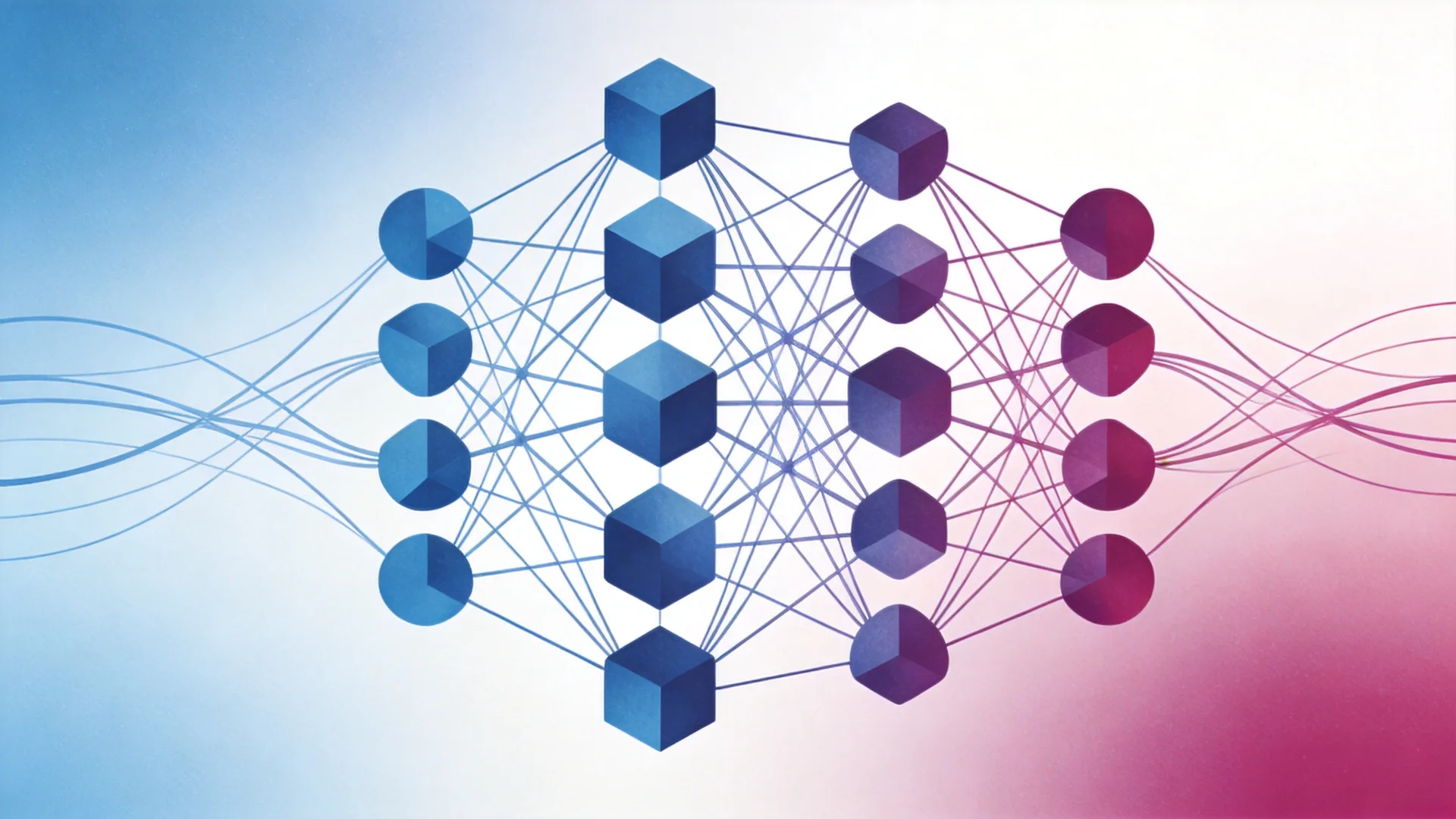
K2.6 publishes a detailed card: 1T total / 32B activated (~3.2% activation), 384 routed experts with 8 selected + 1 shared per token, MLA (Multi-head Latent Attention) with SwiGLU activation, 61 layers (1 dense), and a 400M-parameter MoonViT vision encoder. China AI Hub analysis indicates this is a mid-scale MoE tuned for economy — the 32B active set keeps per-token cost low while the 1T total still dictates self-hosting memory, making it a multi-GPU but not datacenter-scale deployment. See Mixture-of-Experts and the MoE architectures research.
What the context window actually means
The 262,144-token context with a 98,304 output ceiling is the standard mid-tier split — long-input analysis, not long-form generation. China AI Hub analysis indicates this is the clearest spec-level gap from K3’s 1M-in/1M-out pairing, and it is what keeps K2.6 a code/dialogue tool rather than a long-form synthesis tool. See the context-window research.
Pricing implications
$0.95 input / $4.00 output per 1M tokens, cache hits $0.16 (17% of input). China AI Hub analysis indicates the 4.2x input-to-output ratio is mid-tier, and the cache pricing rewards agent loops that re-read shared context. See choosing-by-price.
API, coding, and agent implications
K2.6 supports thinking and non-thinking modes for dialogue and agent tasks, with native vision. It is the model the K-series coding line (Kimi K2.7 Code) and the Kimi Code agent evolved from, though its own coding benchmark evidence is not separately recorded. See choosing-a-coding-model.
Open weights and license
Open weight under Modified MIT, self-hostable. China AI Hub analysis indicates the Modified MIT label is a softer constraint than plain MIT — permissive for most uses but with conditions that should be read before commercial redistribution, distinct from the revenue-threshold licenses on K3 and the Qwen3.8-Max-class weights. See licensing explained and the open-weights hub.
Benchmark interpretation
The two recorded rows are both vendor-reported HLE scores: 36.4 text-only (no tools) and 55.5 with tools. The 19-point gap is the same tool-access pattern the database records elsewhere — tool use materially raises the ceiling on the hardest knowledge exam.
What the benchmarks do not prove
Two vendor-reported HLE rows do not independently verify K2.6 against competitors, and there are no recorded coding or agent benchmarks for K2.6 despite its positioning. Cross-vendor comparison is invalid without matched harnesses and versions. See how to read vendor-reported benchmarks and the benchmark-methodology research.
Suitable and less suitable workloads
Well-suited: open-weight visual-and-text deployment, self-hosting where a permissive-ish license and a 1T/32B footprint fit, dialogue and agent tasks, and multimodal (vision) input. Less suited: 1M-context long-form work, frontier-scale generation, and any use case that has already standardized on K3.
Where this model fits
| Workload | Relevance |
|---|---|
| Long-context analysis | Moderate |
| Coding | Moderate |
| Structured API workflows | Moderate |
| Agent orchestration | Moderate |
| Local self-hosted deployment | High |
| GUI automation | No evidence |
| Video generation | No evidence |
| Enterprise cloud | Moderate |
Relevance judgments are China AI Hub analysis based on documented capabilities, not vendor claims.
China AI Hub analysis
China AI Hub analysis indicates K2.6’s enduring value is as the practical open-weight Kimi: it retains a full architecture card and a permissive-style license while being roughly a third the total parameters of K3 (1T vs 2.8T), which is why it remains the more tractable self-host choice even after K3 took the flagship role. Its thin benchmark record — two HLE rows and nothing for coding or agents — is the clearest sign that it is a transitional release: capable and transparent, but quickly overtaken by the K2.7 coding line and K3 within the same family. See the state of China’s AI models research and the MoE hub.
What is uncertain
- The Modified MIT license’s exact conditions are less fully spelled out than plain MIT and should be read before redistribution.
- Only two benchmark rows (both HLE, both vendor-reported) are recorded; no coding or agent benchmarks are published.
- The 98,304-token output ceiling is documented as the evaluation-configuration max, not necessarily a hard API cap.
Sources
- Kimi API platform — model list
- Kimi API — pricing (chat)
- Hugging Face model card — Kimi K2.6 (architecture, parameters, benchmarks)
Labels used above: Official fact (architecture, parameters and pricing from Moonshot’s docs and the HF card), Vendor-reported claim (the two HLE benchmark scores), and China AI Hub analysis (our synthesis, always introduced as such). No third-party benchmark evidence is currently recorded for this model.
Data interpretation
| Field | Value | Evidence type |
|---|---|---|
| Context window | 262,144 tokens | Official |
| Architecture | Mixture-of-Experts (MoE): 1T total / 32B activated; 384 routed experts (8 selected + 1 shared); MLA attention, SwiGLU activation; 61 layers (1 dense); MoonViT vision encoder (400M) | Official |
| Open weights | Yes | Official |
| License | Modified MIT | Official |
| API pricing | $0.95 / $4 per 1M tokens (USD) | Official |
| HLE | 36.4 (text-only, no tools) accuracy | Vendor-reported |
| HLE | 55.5 (with tools) accuracy | Vendor-reported |
| Family position | 1 model in the Kimi K2.6 family | China AI Hub analysis |
Evidence types: Official = vendor documentation, pricing pages or model cards. Vendor-reported = benchmark scores published by the vendor. China AI Hub analysis = derived from the database itself. See the sourcing policy.
Sources
Confidence and source hierarchy per the sourcing policy. Facts change; check the source before relying on this page.
What is the context window of Kimi K2.6?
Kimi K2.6 has a 262,144-token context window and a maximum output of 98,304 tokens.
Is Kimi K2.6 open weight?
Yes — Kimi K2.6 weights are openly available under the Modified MIT license.
How much does Kimi K2.6 cost through the API?
$0.95 per 1M input tokens and $4 per 1M output tokens (USD).
Where does China AI Hub get its Kimi K2.6 data?
From 3 sources (official pages first), last verified 2026-09-27. Benchmark scores are labeled by source type; see the sourcing policy for details.